
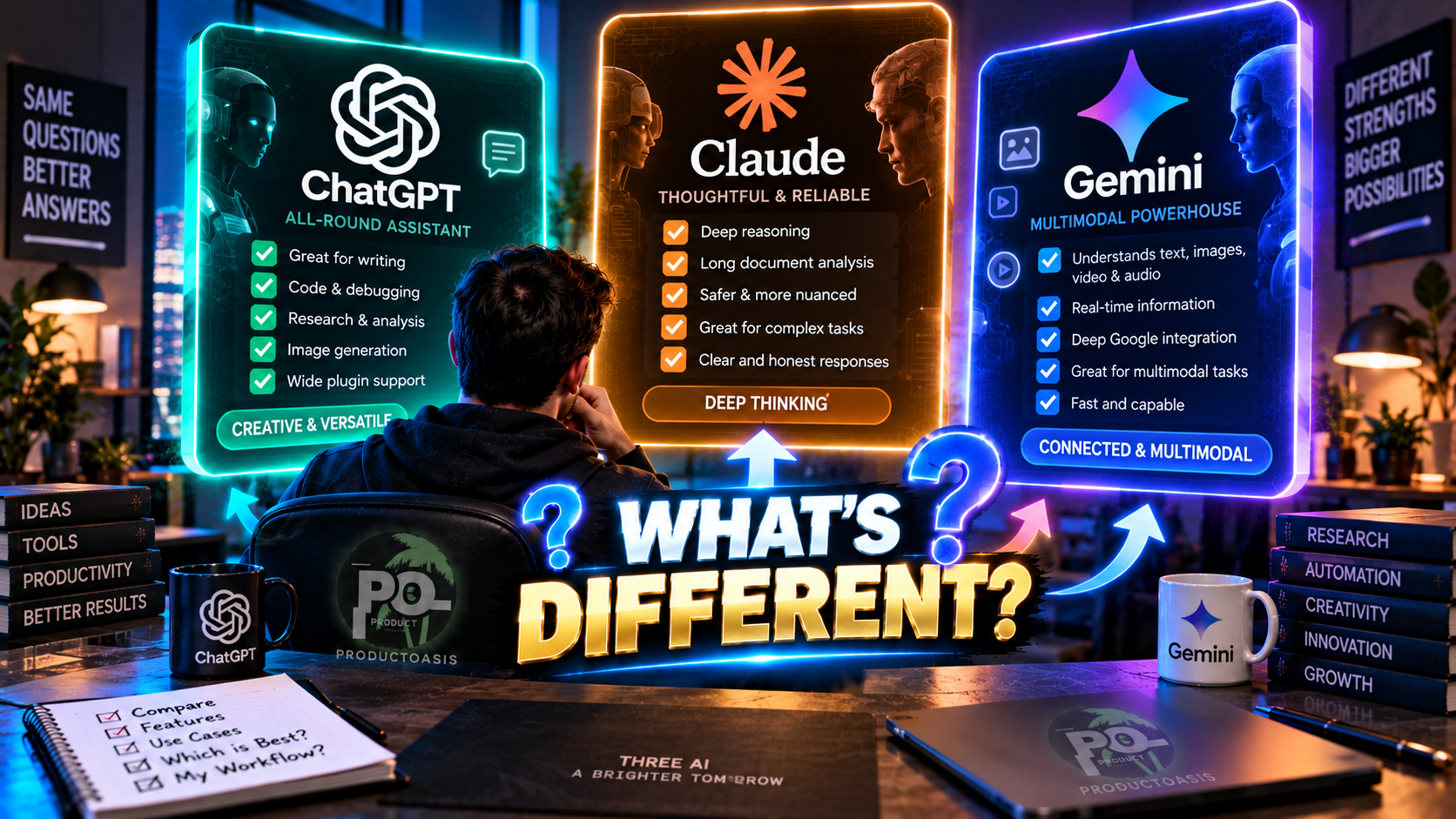
The main difference between Claude Fable 5 and Opus 5 is their intended workload: Opus 5 is designed as a powerful everyday Claude model, while Fable 5 is aimed at more demanding reasoning and long-horizon agentic work. In practical terms, Opus 5 is the sensible starting point for most users, while Fable 5 becomes more relevant when a task requires deeper reasoning, extensive context, or sustained multi-step execution. If you want to see how this advanced AI capability is being applied to business workflows, you can explore Fable Fox AI.
Both models belong to Anthropic’s high-end Claude lineup, and they share several important capabilities. However, their positioning, pricing and ideal use cases are different enough that understanding the distinction can save you money and help you choose the right model for the job.
Claude Fable 5 vs Opus 5: The Key Difference
Claude Opus 5 is positioned as a high-end general-purpose model for professional work, including coding, knowledge work, research and everyday AI tasks. Anthropic describes Fable 5 and its current Fable 5.1 generation as being designed for demanding reasoning and long-horizon agentic work.
| Feature | Claude Fable 5 | Claude Opus 5 |
|---|---|---|
| Primary focus | Demanding reasoning and long-horizon agents | General-purpose professional AI |
| Context window | 1 million tokens | 1 million tokens |
| Maximum output | 128K tokens | 128K tokens |
| API input price | $10 per million tokens for Fable 5.1 | $5 per million tokens |
| API output price | $50 per million tokens for Fable 5.1 | $25 per million tokens |
Anthropic’s current documentation lists Fable 5.1 at twice the published input and output token prices of Opus 5. Both provide a 1-million-token context window and up to 128K output tokens.
What Is Claude Opus 5 Best For?
Opus 5 is the model to consider when you want one highly capable Claude model for a broad range of professional tasks.
- Business writing and content creation
- Software development and coding
- Research and analysis
- Document-based work
- General knowledge tasks
- AI-assisted productivity
Anthropic specifically recommends starting with Opus 5 for most workloads and moving to the Fable 5.1 tier when a task requires more demanding reasoning or long-horizon agentic performance.
What Is Claude Fable 5 Best For?
Fable 5 is aimed at more complex workflows where the AI needs to reason through multiple stages rather than simply respond to an individual prompt.
Anthropic’s current Fable 5.1 documentation highlights demanding reasoning, long-running agentic coding, multistep research and complex document, spreadsheet and slide workflows.
The practical distinction is therefore straightforward: Opus 5 is the everyday workhorse; Fable is the option to consider when the workload itself is unusually demanding.
Why Does the Price Difference Matter?
At the published API rates, Opus 5 costs $5 per million input tokens and $25 per million output tokens. Fable 5.1 costs $10 per million input tokens and $50 per million output tokens.
For occasional users, this difference may not be especially important. For developers, agencies or businesses processing large volumes of AI requests, however, model economics can become a major consideration.
If Opus 5 completes the job effectively, there may be little reason to pay the higher Fable rate. If the workflow genuinely benefits from additional reasoning and agentic capability, the Fable tier may make more sense.
Why Fable 5 Matters for the New AI Business Opportunity
The model comparison is only part of the story. The more interesting question is what people can actually build with advanced AI.
Fable Fox AI is positioned around using Claude Fable 5 to create business assets. The supplied product information describes a workflow in which a business can be analyzed from a link and AI can generate ready-to-sell assets, with freelancers, agencies, solopreneurs, content creators and beginners identified as potential users. :contentReference[oaicite:0]{index=0}
That makes Fable Fox AI different from simply subscribing to Claude. The model supplies the underlying AI capability; the product is designed around applying that capability to a business-oriented workflow.
If you want the wider picture, including how Fable 5 compares with Opus 5 and Kimi K3, read the complete Claude Fable 5 vs Opus 5 vs Kimi K3 comparison.
Watch the conversation: Josh and I discuss Claude Fable 5, Opus 5 and the AI opportunity developing around these increasingly capable models.
Explore the Fable Fox AI approach to using advanced AI for business assets.
Which Claude Model Should You Use?
Use Opus 5 if you want a powerful general-purpose model for everyday professional work. Its lower published API price also makes it attractive for regular or higher-volume usage.
Consider Fable 5 when your workflow requires demanding reasoning, long-running agents, multistep research or other complex tasks where the additional capability can justify the higher cost.
You do not need to choose Fable simply because it is positioned higher in the lineup. Anthropic’s own current guidance is to start with Opus 5 for most workloads and move to Fable 5.1 when the task requires it.
Frequently Asked Questions
Is Claude Fable 5 better than Opus 5?
Not for every task. Opus 5 is positioned as the general-purpose starting point, while Fable 5.1 is designed for more demanding reasoning and long-horizon agentic workloads.
Is Claude Opus 5 cheaper than Fable 5?
Yes. The current published API rates for Opus 5 are half the input and output token prices listed for Fable 5.1.
Do Claude Fable 5 and Opus 5 have the same context window?
Yes. Anthropic currently lists both at a 1-million-token context window, with up to 128K output tokens.
Which is better for everyday AI use?
Opus 5 is the more appropriate starting point for most everyday AI workloads, according to Anthropic’s current model guidance.
Final Answer: What Is the Difference?
The difference comes down to workload intensity. Claude Opus 5 is the high-end general-purpose choice: powerful, versatile and less expensive at the published API rates. Claude Fable 5 is aimed at more demanding reasoning and long-horizon agentic workflows where deeper capability can justify the additional cost.
And if your interest extends beyond choosing a Claude model to discovering how advanced AI can be turned into practical business assets, the next step is to read the complete Claude Fable 5 vs Opus 5 vs Kimi K3 comparison.