
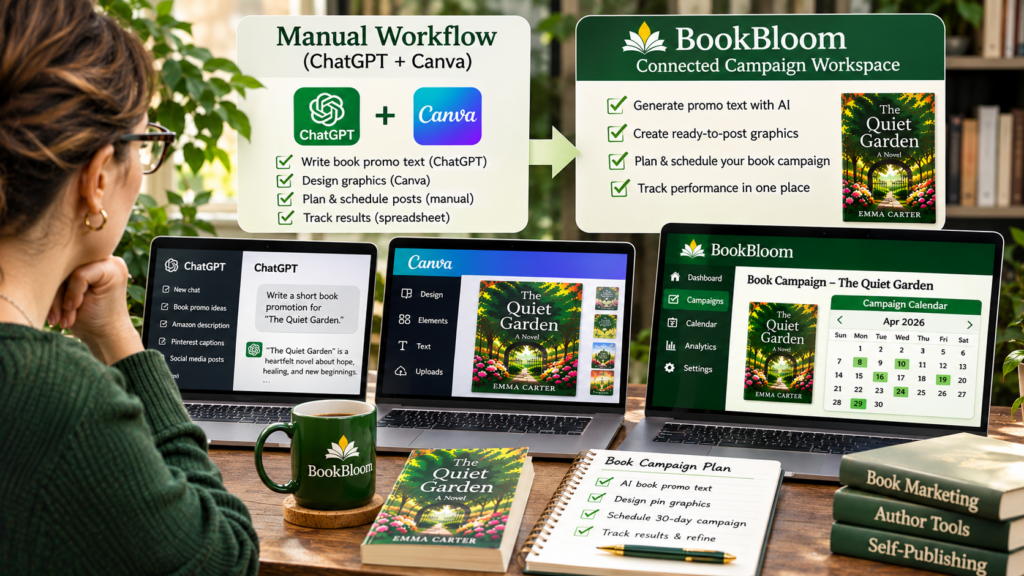
BookBloom is worth considering over a DIY ChatGPT-and-Canva workflow if you value a more book-focused, organised promotional process and want to reduce the time spent switching between tools. However, ChatGPT and Canva can be the better choice if you prefer greater creative control, flexible customisation, and the freedom to build your own workflow. The right option depends on whether convenience or hands-on control matters more to you. If you want to explore BookBloom before comparing the options, check out BookBloom here.
BookBloom vs ChatGPT and Canva: What Is the Main Difference?
The biggest difference is how the work is organised. With a DIY setup, you use ChatGPT to brainstorm ideas, draft captions and promotional copy, and develop campaign concepts. You then move to Canva to create graphics, promotional images, and other visual assets. You remain responsible for connecting the pieces and keeping your marketing organised.
BookBloom takes a more book-marketing-focused approach. It is positioned around author promotion, with advertised feature areas that include AI-assisted artwork and copywriting, content planning, and book-related promotional resources. Instead of assembling every part of the process yourself, you can explore a workflow designed specifically around promoting books.
That does not automatically make one option better. It means the two approaches solve the organisation problem differently.
Comparing the Two Workflows
| Area | BookBloom | DIY ChatGPT + Canva |
|---|---|---|
| Promotional copy | Advertised AI-assisted copywriting for book promotion | ChatGPT can draft captions, descriptions, ideas, and campaign copy |
| Graphics | Advertised AI artwork and promotional visual support | Canva provides a flexible design workspace and templates |
| Campaign planning | Book-focused content planning features | You organise the workflow using your own prompts, documents, or calendar |
| Customisation | Depends on the available BookBloom features and controls | More freedom to combine prompts, templates, and design methods |
| Workflow management | Designed to bring selected book-promotion activities together | You manage the handoffs between separate tools |
| Learning curve | One book-focused environment to learn | You need to learn and coordinate two separate applications |
When BookBloom Makes More Sense
BookBloom may be the more convenient choice if your main goal is to create and organise promotional content for your books without building every step from scratch.
Consider an independent author preparing a new release. They need social captions, promotional graphics, content ideas, and a consistent schedule. A DIY workflow means prompting ChatGPT, refining the output, opening Canva, designing the visuals, and organising the finished assets. A book-focused platform may make selected parts of that process more convenient by bringing related promotional activities together.
It may also appeal to authors managing several titles who want a repeatable approach to book promotion. The important point is to check the current plan and confirm that the features you need are actually included.
When ChatGPT and Canva Are the Better Choice
The DIY combination remains powerful, especially if you enjoy experimenting and want control over the details.
- You want creative flexibility: Canva offers a broad design environment for adapting layouts, colours, typography, and visual styles.
- You create more than book content: ChatGPT can help with many writing and brainstorming tasks beyond author marketing.
- You already know both tools: If your existing workflow is efficient, moving to another platform may not save much time.
- You prefer separate specialist tools: You can choose the exact design and writing processes that suit each project.
- You want to control the process: You decide how prompts, drafts, graphics, revisions, and publishing tasks fit together.
Is an All-in-One Book Marketing Workflow Worth Paying For?
The value of an all-in-one platform is not simply the number of features it advertises. It is whether those features reduce friction in your actual working day.
Compare the total cost of the tools you currently use with the BookBloom plan you are considering. Include any subscriptions, optional upgrades, and additional services you may still need. Then consider the time spent moving copy and graphics between applications, organising campaign ideas, and repeating tasks for different books.
If BookBloom handles enough of those activities to justify its cost, the convenience may be worthwhile. If you use ChatGPT and Canva only occasionally, or need advanced creative control, the DIY approach may offer better value. For a closer look at its advertised features and workflow, read our complete BookBloom review.
Frequently Asked Questions
Is BookBloom better than ChatGPT and Canva for authors?
Not for every author. BookBloom is designed around book promotion and may offer a more focused workflow. ChatGPT and Canva provide flexibility across a wider range of writing and design projects.
Can ChatGPT and Canva create book marketing content?
Yes. ChatGPT can help draft promotional copy and campaign ideas, while Canva can be used to design graphics and social media visuals. You will need to organise the workflow between them.
Does BookBloom eliminate the need for Canva?
Not necessarily. Its advertised artwork features may cover some promotional design needs, but authors who rely on advanced layouts and detailed editing may still prefer Canva.
Should beginners choose an all-in-one tool?
An all-in-one workflow can be easier to manage when it brings relevant tasks together. Beginners should still compare the included features, costs, and learning requirements before choosing.
Final Verdict: Which Workflow Should You Choose?
Choose BookBloom if you want a more focused book-marketing environment and value having selected promotional activities brought together. Choose DIY ChatGPT and Canva if you prefer creative freedom, broader use cases, and direct control over how your content is produced.
Ultimately, an all-in-one workflow is worth paying for only when it saves meaningful time or simplifies tasks you perform regularly. Do not switch simply because a platform promises convenience. Compare the features you will actually use, check the current plan details, and choose the setup that supports your publishing goals. To explore BookBloom in more detail, visit the full BookBloom review.