
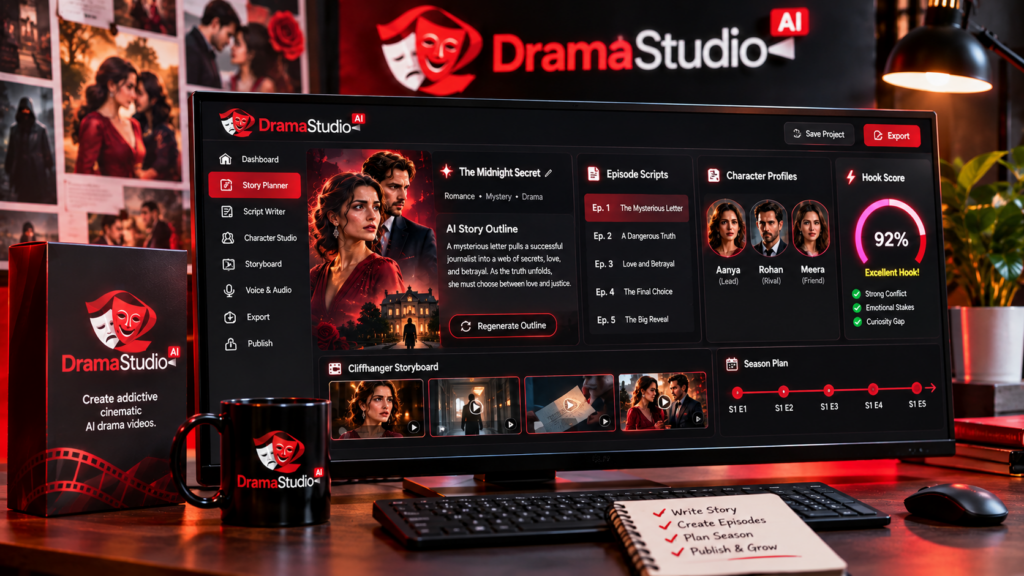
DramaStudioAI’s Story Writer and BingeHook Engine use AI to turn a simple story idea into structured drama scripts, attention-grabbing opening hooks, and episode-ending cliffhangers designed to keep viewers interested. The Story Writer develops your concept into a complete story foundation, while the BingeHook Engine generates and scores multiple hook ideas to help you create stronger episode openings. Together, these tools make it easier to plan engaging episodic content without writing every element from scratch. You can explore DramaStudioAI here to see how its AI storytelling tools fit into the video creation process.
What Is the DramaStudioAI Story Writer?
The DramaStudioAI Story Writer is an AI-powered storytelling tool that helps creators develop an initial concept into a structured drama. Instead of starting with a blank page, you can enter a short idea, choose a ready-made template, or use the platform’s Surprise Me option to explore a new concept.
Based on your input, the AI can develop important story elements, including:
- Story title: A title that introduces the central idea of your drama.
- Logline: A concise summary that communicates the main story concept.
- Premise: The foundation of the story, including its central situation.
- Target audience: The audience the story is intended to appeal to.
- Emotional angle: The feelings and emotional themes that drive the drama.
- Main conflict: The central problem that creates tension and moves the plot forward.
- Season storyline: A broader outline showing how the story can develop across episodes.
- Viral hook: An attention-grabbing angle intended to make the concept more compelling.
The platform also suggests characters based on the story. You can review the generated content and make changes before moving to the next production stage.
What Is the BingeHook Engine?
The BingeHook Engine is DramaStudioAI’s AI-powered hook generation feature. Its purpose is to help creators develop compelling opening lines and story angles that encourage viewers to keep watching.
A strong hook matters because short-form video audiences often decide quickly whether a story is worth their attention. An opening that introduces a surprising secret, emotional conflict, unexpected betrayal, or unanswered question can create curiosity immediately.
DramaStudioAI can generate batches of 10, 20, 30, or 50 hooks across eight different styles. It also scores generated hooks on a scale of 1 to 100, giving creators another way to compare potential openings and identify ideas worth developing.
How to Create AI Scripts and Cliffhangers with DramaStudioAI
Creating an episodic drama involves more than generating a few interesting sentences. The story needs a clear direction, engaging scenes, and reasons for viewers to return. Here is how the DramaStudioAI workflow supports that process.
1. Start with a Simple Story Idea
Enter your concept in the idea section. You can describe a romance, revenge plot, family conflict, mystery, or another drama concept. You can also choose from the platform’s ready-made templates or use Surprise Me for inspiration. DramaStudioAI supports 22 genres and provides 105 templates to help creators get started.
2. Generate Your Story Foundation
Let the Story Writer expand your idea into a title, logline, premise, characters, main conflict, and season storyline. If your initial concept is too brief, the Enhance option can help expand it into a more developed idea. Review the generated story and edit anything that does not match your creative direction.
3. Generate and Compare Hooks
Use the BingeHook Engine to create multiple opening hooks. Experiment with different styles and compare their scores. For example, a romance drama might begin with a shocking confession, while a revenge story could open with a betrayal or an unexpected return. Choose the hook that best introduces the episode’s central tension.
4. Build Scripts and Scenes
Once the story direction is approved, continue into script and scene development. DramaStudioAI can generate episode scripts and storyboards, with each episode structured around approximately two to four scenes. Dialogue is designed to remain concise, with lines under 18 words, helping keep the storytelling suitable for short-form drama videos.
5. Add Episode-Ending Cliffhangers
A cliffhanger gives viewers a reason to watch the next episode. DramaStudioAI provides seven cliffhanger styles to help creators end episodes with unresolved tension, surprising developments, or unanswered questions. You can select an approach that fits the story rather than ending every episode in the same way.
Why Are Hooks and Cliffhangers Important?
Hooks and cliffhangers serve different but connected purposes. A hook attracts attention at the beginning, while a cliffhanger creates anticipation at the end. When used together, they help give an episodic drama a stronger viewing rhythm.
- Stronger openings: Hooks introduce conflict or curiosity before viewers lose interest.
- Better storytelling flow: A clear story foundation helps episodes feel connected.
- More anticipation: Cliffhangers leave important questions unresolved.
- Consistent episode planning: A season storyline helps maintain direction across multiple episodes.
- Faster content development: AI-generated ideas and scripts reduce the need to start every element manually.
Tips for Getting Better Results from the Story Writer
- Begin with a clear conflict: Give the AI a central problem that can drive the story.
- Choose a suitable genre: Romance, revenge, mystery, and family drama each need different storytelling approaches.
- Compare several hooks: Do not automatically choose the first generated option.
- Keep dialogue focused: Short, purposeful lines work well in vertical episodes.
- Make cliffhangers meaningful: Connect episode endings to the main storyline instead of adding random surprises.
- Review before approval: Edit the story and scripts so the final content reflects your creative vision.
Is DramaStudioAI Useful for Creating Episodic AI Dramas?
Yes. DramaStudioAI is designed to connect story development with the rest of the video production process. After approving the story, creators can move through characters, scripts, scenes, visuals, voice generation, lip-sync, video creation, and episode production.
Its approval-based workflow also gives creators opportunities to review earlier stages before proceeding. This is useful when developing a series because changes to the story can affect characters, dialogue, and later scenes. For a closer look at the complete platform, features, and pricing, read our complete DramaStudioAI review.
Final Thoughts
DramaStudioAI’s Story Writer and BingeHook Engine help transform basic ideas into structured episodic stories with scripts, attention-grabbing hooks, and cliffhanger endings. The Story Writer provides the foundation, while the BingeHook Engine helps creators explore different ways to capture attention and build anticipation.
For creators who want to produce short AI dramas for social media, these tools can simplify the planning and writing stages while leaving room for creative editing. Strong stories still depend on good ideas and thoughtful review, but AI can make the process faster and easier to manage.
To understand how the Story Writer, BingeHook Engine, and video creation features work together, take a look at our full DramaStudioAI review.