Why is competitor analysis so important in SEO today?
If you’ve ever wondered why some pages rank effortlessly while yours struggle, the answer is usually hidden in competitor strategy.
Most beginners try to create content blindly. However, SEO today is less about guessing and more about understanding what already works.
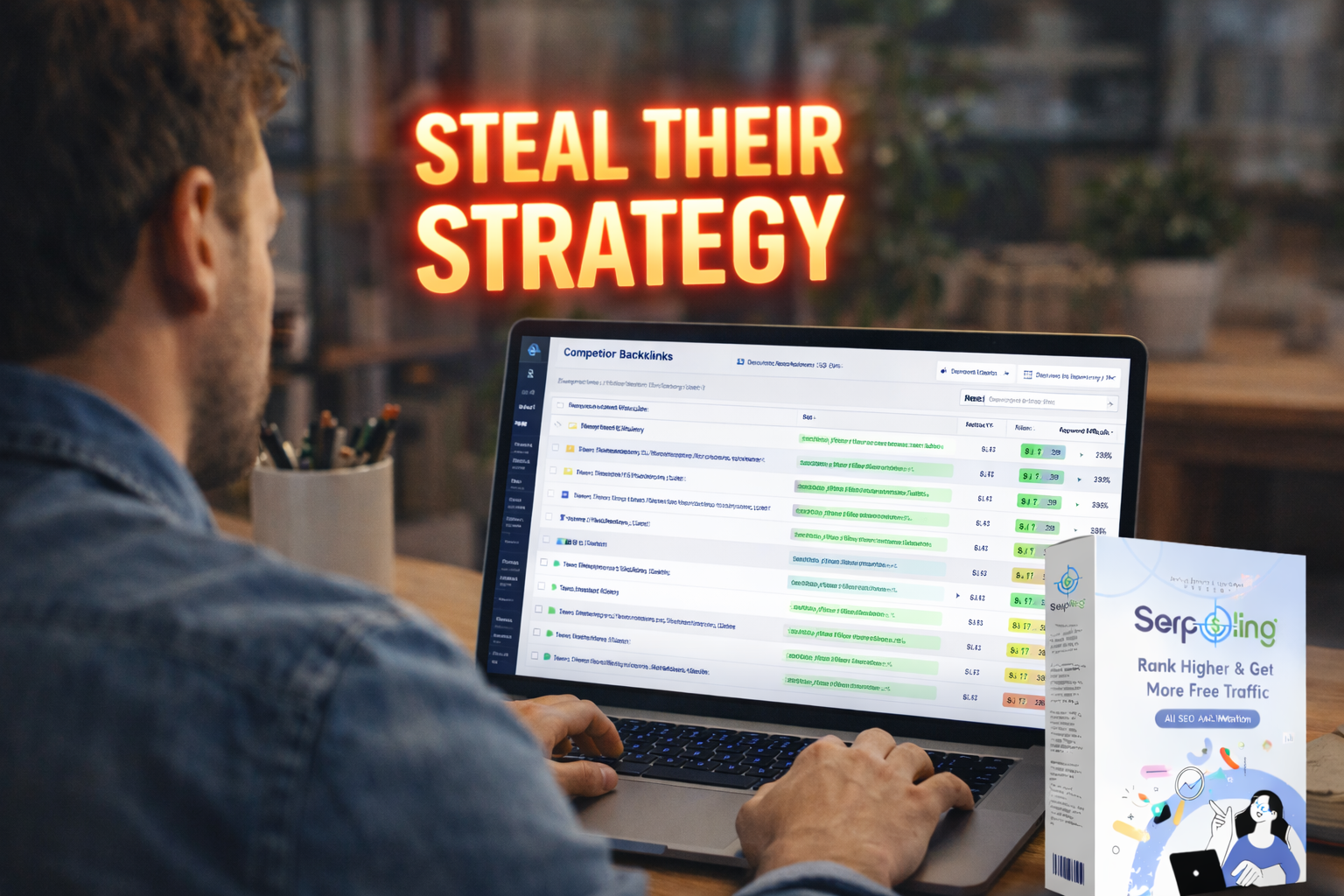
That’s where competitor SEO SerpSling becomes useful. Instead of starting from scratch, you can analyze top-ranking pages and build smarter strategies based on real data.
How does competitor SEO SerpSling help you reverse engineer rankings?
In simple terms, SerpSling allows you to break down exactly what your competitors did to rank, including their keywords, backlinks, and content structure.
Instead of relying on assumptions, you can see:
- Which keywords they target
- How strong their backlinks are
- What kind of content ranks
Therefore, you’re not experimenting randomly. You’re following proven patterns.
What exactly can you uncover using competitor SEO SerpSling?
Here’s what actually matters when analyzing competitors.
Can you see their keyword strategy?
Yes, and this is the starting point.
SerpSling shows:
- Primary keywords competitors rank for
- Related long-tail keywords
- Hidden opportunities you can target
As a result, you don’t need to guess which keywords to use.
Can you analyze their backlinks?
Why are backlinks still important?
Backlinks remain one of the strongest ranking signals.
With SerpSling, you can see:
- Number of backlinks competitors have
- Types of referring domains
- Anchor text used
This helps you understand what level of authority is required to compete.
Can you understand their content structure?
This is often overlooked.
You can analyze:
- Content length
- Page structure
- Topic coverage
Therefore, you can create content that is not just similar but better.
How do you reverse engineer a competitor step by step?
Let’s simplify the process.
Step 1: Choose a keyword
Start with a keyword you want to rank for.
SerpSling will show top-ranking pages for that keyword.
Step 2: Analyze top competitors
Click on the top results.
You’ll get detailed insights into:
- Their backlinks
- Ranking keywords
- Overall strength
Step 3: Identify gaps
Now compare their strategy with yours.
Look for:
- Missing topics
- Weak backlinks
- Content gaps
This is where your opportunity lies.
Step 4: Build a better strategy
Use the insights to:
- Target smarter keywords
- Improve your content
- Match or exceed backlink quality
This is how competitor SEO SerpSling turns analysis into action.
Is this better than traditional competitor research methods?
Yes, especially for beginners.
Traditional methods involve:
- Using multiple tools
- Exporting data
- Manually analyzing results
However, that process is time-consuming.
SerpSling simplifies everything into one dashboard. It shows what matters without overwhelming you.
Because of that, you can focus on execution instead of analysis.
If you want to understand how this fits into a complete SEO workflow, there’s a more detailed explanation available that connects keyword research, competitor analysis, and ranking strategy.
Can beginners use competitor SEO SerpSling effectively?
Absolutely.
Most beginners struggle because they:
- Don’t know what to analyze
- Misinterpret SEO data
- Miss key ranking factors
SerpSling solves this by:
- Highlighting important metrics
- Simplifying competitor insights
- Guiding your next steps
Therefore, even without experience, you can make informed decisions.
What should you focus on when analyzing competitors?
The key idea is not to copy blindly.
Instead, focus on:
- What works consistently
- Where competitors are weak
- How you can improve
SerpSling helps you see patterns across multiple competitors, which is where real insights come from.
Final thoughts
SEO is no longer about guessing what might work. It’s about understanding what already works and improving on it.
Competitor SEO SerpSling gives you that advantage by turning competitor data into a clear action plan.
If you want to see how to combine this with keyword research and content creation, you can explore a complete walkthrough that explains the full strategy step by step.
Or, if you prefer to test how competitor analysis works in real scenarios, you can take a closer look at the platform here and explore its features directly.